The Agentic Post
Breaking
Black October 2026: Every Major AI Security Incident, Explained  Â·  ARTEX: The Open-Source AI Hacking Tool Behind October’s Biggest Attacks  Â·  Chinese Hackers Used AI Agents to Hit 2,250 Microsoft 365 Accounts  Â·  PHP2Shell Is Now Being Exploited, and Attacks Began Before the Patch  Â·  OpenAI-Backed Thrive Buys ADT for $15.3 Billion to Rebuild It With AI  Â·  The AI Data Center Backlash Hits Minnesota and Australia in One Week  ·  
Home/Hardware & Robotics/Chips & GPUs
Edge AI Chips vs Data Center Chips

Edge AI Chips vs Data Center Chips

Chips & GPUs

An explainer on the difference between edge AI chips and data center chips, covering their different design priorities and where you're already using edge AI.

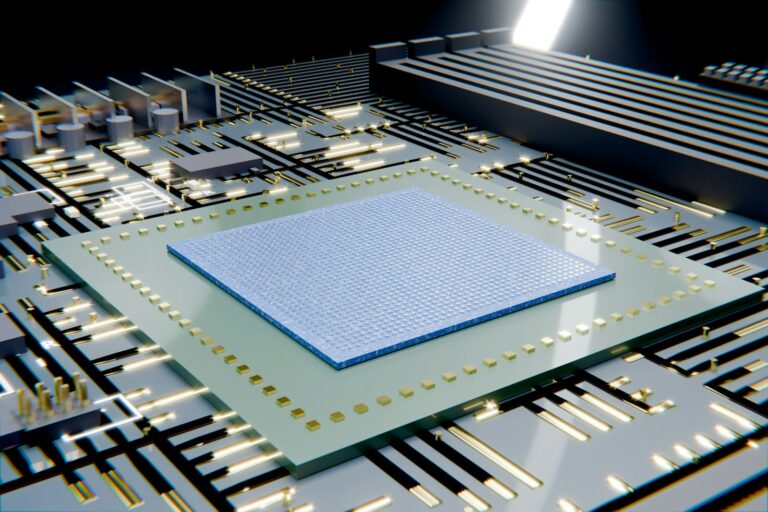
Not all AI inference happens in a distant data center. Edge chips, designed to run AI directly on a local device, solve a genuinely different problem than the massive accelerators covered in most AI hardware coverage.

Edge AI chips are built to run inside a phone, camera, or other local device, prioritizing extremely low power consumption and physical size over raw throughput. Built for running an already-trained, often compressed model efficiently on-device, not training new models.

On-device processing avoids network latency, works without an internet connection, and keeps data from leaving the device, a real advantage for privacy-sensitive applications. A genuinely different tradeoff than data center chips, which prioritize maximum throughput at the cost of needing a live connection.

Camera features recognizing faces or objects in real time, voice assistants processing a wake word locally before sending anything to the cloud, on-device photo enhancement, all typically run on dedicated edge AI hardware rather than a remote server.

Edge and data center chips solve genuinely different problems, low-power local processing versus maximum-throughput centralized compute. See NVIDIA’s own Vera Rubin page for the current data center generation.
Up Next
What Is an Embedding? A Plain Explainer

What Is an Embedding? A Plain Explainer

AI Glossary

A plain-English explainer on AI embeddings, how they represent meaning numerically, and how they power modern search and retrieval systems.

“Embedding” is a foundational concept behind search, recommendations, and RAG systems, and it’s more intuitive than the technical name suggests once you see what it’s actually doing.

An embedding converts a piece of text, an image, or other content into a list of numbers representing its meaning in a way a computer can compare mathematically. Content with similar meaning ends up with mathematically similar numbers, even if the actual words used are completely different.

A search for “canine care tips” and a document about “dog health advice” share no exact keywords, but their embeddings would be mathematically close, since they mean similar things. This is what lets modern search find genuinely relevant results even when wording doesn’t match at all.

Our explainer on RAG covers exactly this: the retrieval step works by converting your question into an embedding, then finding the documents with the mathematically closest embeddings, rather than relying on exact keyword overlap.

The quiet foundation behind most modern search, recommendation, and retrieval systems. See a broader technical overview for more depth.