The Agentic Post
Breaking
Gemini’s Multimodal Features, Explained  Â·  ChatGPT Custom GPTs, Explained  Â·  What Is Constitutional AI? Explained  Â·  AI Capex Explained for Investors  Â·  AI Startup Valuations: How They Are Set  Â·  How to Reskill for an AI Job Market  ·  
Home/Hardware & Robotics/Chips & GPUs
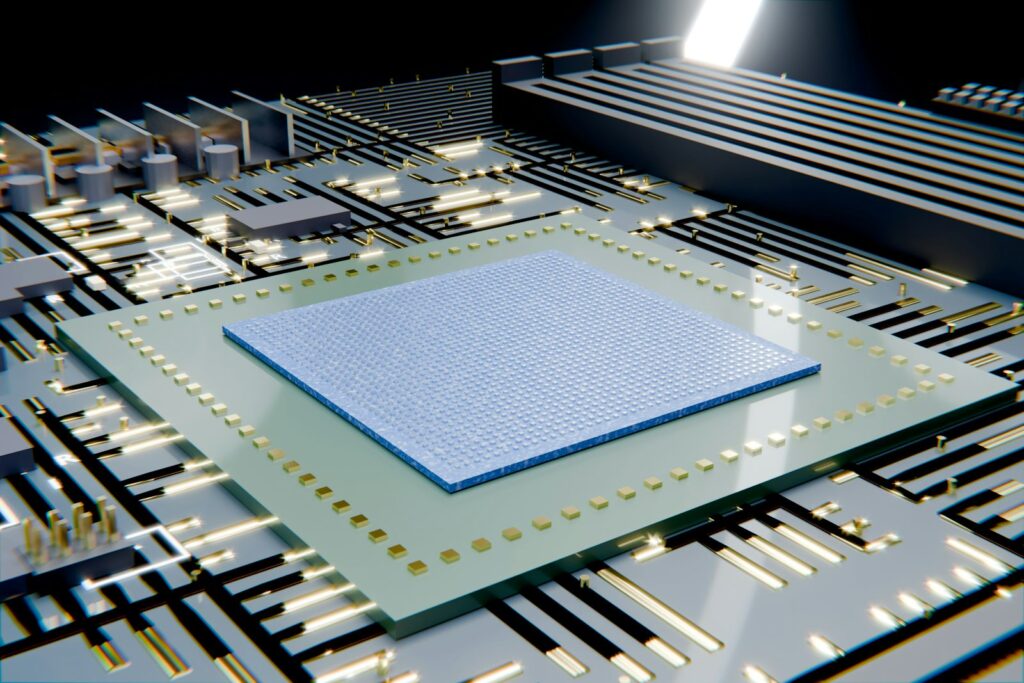
AI Chips and GPUs in 2026, Explained

AI Chips and GPUs in 2026, Explained

Chips & GPUs

A practical explainer on current AI chips and GPUs, covering training versus inference hardware, and why infrastructure matters as much as the chip itself.

You don’t need to become a chip engineer to understand what actually differentiates current AI hardware. Here’s the practical version.

Our coverage of NVIDIA’s Vera Rubin platform shipping this fall covers the current flagship generation: a seven-chip, rack-scale system claiming a 10x cut in inference cost over the previous generation, with HBM4 memory delivering nearly triple the per-GPU bandwidth.

Not all AI hardware does the same job. Training chips move enormous amounts of data between thousands of GPUs working on one model over weeks. Inference chips, running an already-trained model for real requests, prioritize low latency and cost-efficiency at volume instead. Different priorities, even when they share underlying architecture.

The infrastructure around the chip matters as much as the chip itself now: power delivery, cooling, interconnect speed between GPUs in a rack. Power, not chip supply, is the actual bottleneck on deploying new capacity, which is exactly why NVIDIA’s platform bundles its own power-provisioning tech.

Most people access this hardware through a cloud provider, not by buying it. What actually matters practically is which cloud regions have the newest generation available, and at what price.

Read more directly at NVIDIA’s own Vera Rubin page.
Up Next
What Does ‘Hallucination’ Mean in AI?

What Does ‘Hallucination’ Mean in AI?

AI Glossary

A plain-English explainer on AI hallucinations, why they happen, where they're most common, and how to protect yourself against them.

“Hallucination” is one of the most-used, least-precisely-understood terms in AI. Here’s what it actually means.

A hallucination is when a model generates something false and presents it with the same confident tone as something true. It’s not lying, the model has no concept of true or false the way a person does. It’s a byproduct of how these systems generate text: predicting plausible-sounding continuations, which is usually accurate but isn’t the same mechanism as verifying a fact.

It shows up most in citations and sources, models can invent a complete, plausible-looking citation for a paper that doesn’t exist. Specific numbers, especially ones that sound precise. Recent events past the training cutoff. And niche topics with less training data behind them.

It’s not a bug specific to one company’s model, it’s structural. Models with live web search are meaningfully more reliable for current facts, but still worth checking, since search results themselves can be misread. Verify anything specific enough to matter if it’s wrong, especially citations and exact numbers. Our full guide to fact-checking AI content covers the actual verification steps.

See a broader technical overview for more depth.