The Agentic Post
Breaking
Gemini’s Multimodal Features, Explained  Â·  ChatGPT Custom GPTs, Explained  Â·  What Is Constitutional AI? Explained  Â·  AI Capex Explained for Investors  Â·  AI Startup Valuations: How They Are Set  Â·  How to Reskill for an AI Job Market  ·  
Home/AI Agents/Computer-Use Agents
Cloudflare Builds a Browser Just for AI Agents

Cloudflare Builds a Browser Just for AI Agents

Computer-Use Agents

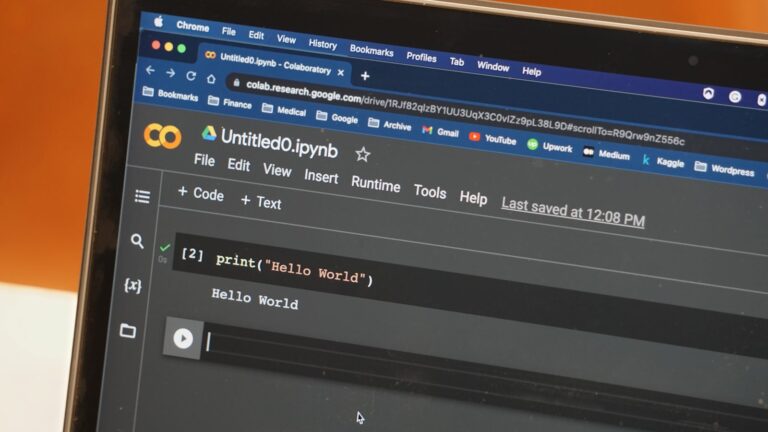
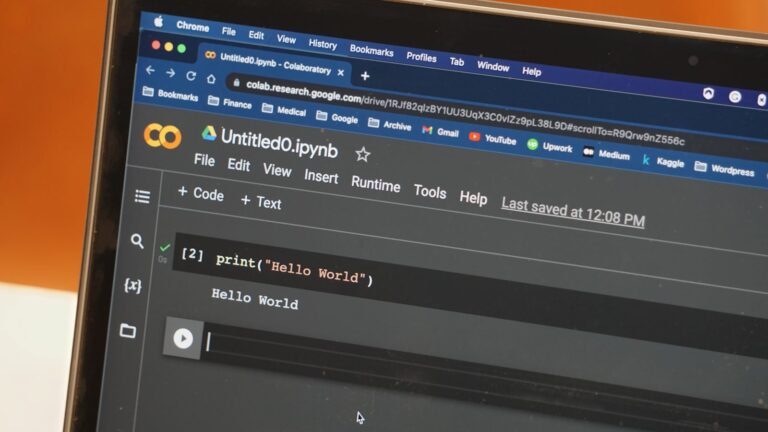
Cloudflare launched Kitesurf, a cloud-hosted browser built specifically for AI agents rather than human users, promising lower compute cost than running agents on headless Chromium.

Cloudflare has joined the growing list of companies building a new web browser, but it skipped the crowded fight for human users entirely. The company’s new release, Kitesurf, is a cloud-hosted browser designed specifically to be driven by AI agents rather than people, and it reflects a genuinely different set of engineering priorities than any consumer browser on the market.

Why a browser built for people is the wrong tool for agents

As AI shifts from chatbots that answer questions to agents that complete tasks on a person’s behalf, browsers become a genuinely critical piece of infrastructure, since navigating and using ordinary websites is exactly how a human would carry out most of those same tasks. But a browser built for a human doesn’t actually fit an AI agent’s needs well. Cloudflare points out that an agent-facing browser simply doesn’t care about the things a human-facing one is built around, themes, tabs, bookmarks, extensions, visual polish. Instead, it needs to manage context window usage efficiently, keep performance and token costs down, and scale to potentially enormous numbers of simultaneous, short-lived sessions in a way a desktop browser was never designed to do.

The threat model is different too. An AI-driven browser faces risks a human-facing one mostly doesn’t, including prompt injection attacks, where malicious instructions embedded in a webpage’s content attempt to hijack the agent’s behavior, a risk category our own security guide for computer-use agents covers in more depth. Designing specifically around that threat model, rather than retrofitting a consumer browser’s security assumptions onto agentic use, is a meaningful part of Cloudflare’s pitch for building something new rather than just running agents on top of headless Chromium, the approach most agent developers currently default to.

What it’s actually built from

Kitesurf runs entirely on top of Cloudflare’s existing serverless platform, Workers, and Cloudflare says it built the browser from a combination of existing open-source pieces rather than starting completely from scratch: a modular rendering engine from the Blitz project, Firefox’s own CSS parser, Stylo, and Boa JS, a Rust-based ECMAScript engine for actually executing JavaScript. Cloudflare has also credited Obscura, an open-source Rust headless browser engine, with directly inspiring the project, noting that its first working proof of concept was literally a port of Obscura onto the Workers platform before the team built it out further.

Remarkably, Cloudflare says it decided to build Kitesurf just twelve weeks before this announcement, a genuinely fast timeline for a functioning browser engine, even one built substantially from existing components rather than written entirely from zero. The company reports Kitesurf already passes more than 215,000 web platform tests, the standardized test suite browser makers use to verify spec compliance, and says it’s adding hundreds more passing tests every week, alongside confirming it correctly renders real, non-trivial sites including Wikipedia, Hacker News, the TodoMVC benchmark app commonly used to compare JavaScript frameworks, and much of Cloudflare’s own dashboard.

The actual pitch: cheaper than Chromium at scale

Cloudflare’s core argument for developers is efficiency, not novelty. The company says Kitesurf is significantly more efficient in both CPU and memory consumption than Chromium for the specific tasks agentic workflows actually perform most, like taking screenshots and extracting structured content from HTML. For any developer running agent-driven browsing at real volume, where a single headless Chromium instance can carry meaningful memory overhead, a lighter-weight alternative purpose-built for exactly this workload translates directly into lower infrastructure cost per agent session, potentially at significant scale once usage climbs into production-level request volumes.

Kitesurf is currently available for free while in beta, accessed through Browser Run, Cloudflare’s existing product for programmatically controlling headless browser instances across its network. That distribution choice matters: rather than launching Kitesurf as a standalone product, Cloudflare is folding it directly into infrastructure developers may already be using, lowering the switching cost for anyone already building agents on Cloudflare’s platform.

Where this fits in a crowded, fast-moving category

Agent-facing browser infrastructure has become a genuinely active category this year, with multiple companies racing to solve the same underlying problem from different angles. Cloudflare’s approach, a from-scratch rendering engine optimized for efficiency and running entirely inside its own serverless platform, is a notably different bet than competitors building agent browser tooling as a thin automation layer on top of standard Chromium. The tradeoff is real: a new rendering engine built in twelve weeks, even from proven open-source components, inevitably has rougher edges and less complete site compatibility than a browser engine with years of production hardening behind it, which is presumably part of why Cloudflare is framing this explicitly as a beta and publishing its own test-pass numbers rather than claiming full parity with Chromium out of the gate.

For developers evaluating whether to switch, the practical question is whether Kitesurf’s current site-compatibility level, verified so far on sites like Wikipedia and Hacker News rather than the full breadth of the modern web, already covers the specific sites their agents need to operate on. For narrow, well-defined agentic workflows against known, relatively standard sites, the efficiency gains Cloudflare is advertising may be worth adopting now, in beta. For agents that need to reliably navigate the long tail of the modern web’s more complex, JavaScript-heavy sites, waiting for compatibility to mature further is likely the safer near-term choice.

Why Cloudflare specifically is positioned to make this bet

Cloudflare’s decision to build Kitesurf on top of its own Workers platform, rather than as a standalone service, is a meaningful strategic choice beyond simple convenience. It means every agent session running through Kitesurf executes on infrastructure Cloudflare already operates at massive global scale, giving the company a cost structure for running headless browser instances that a smaller, dedicated agent-tooling startup would struggle to match without building out comparable infrastructure first. That’s a genuine structural advantage in a category where the core value proposition, as Cloudflare itself frames it, is reducing the compute cost of running browser automation at volume.

It also mirrors a pattern showing up elsewhere in AI infrastructure this year: platform companies with existing global compute footprints, rather than venture-funded startups building from zero, increasingly have a real edge in categories where raw infrastructure efficiency is the actual product. Cloudflare is applying the same logic here that has driven its broader push into AI-adjacent infrastructure, treating agent tooling as a natural extension of a network it already operates at scale, rather than a separate product line requiring entirely new infrastructure investment.

The open-source lineage is worth noting too

Kitesurf’s construction from existing open-source components, Blitz’s rendering engine, Firefox’s Stylo CSS parser, and the Boa JS engine, reflects a broader trend in how fast-moving infrastructure gets built in 2026: rather than one company owning an entire technology stack end to end, specialized open-source projects handle individual layers well, and companies with distribution and infrastructure assemble them into a complete product faster than any single team could build from scratch. That approach is also part of why Cloudflare was able to move from initial concept to a working, tested browser in roughly twelve weeks, a timeline that would be difficult to imagine for a fully from-scratch rendering engine built without leaning on mature existing components.

See Cloudflare’s own announcement for the full technical breakdown.
Up Next
Musk’s $16.8B Chip Fab Bet Lands in Texas

Musk’s $16.8B Chip Fab Bet Lands in Texas

Chips & GPUs

Tesla and SpaceX confirmed their jointly developed Terafab chip factory will be built in Grimes County, Texas, with an initial 16.8 billion dollar investment aimed at supplying compute for robots, robotaxis, and orbital data centers.

Tesla and SpaceX confirmed this week that Terafab, the advanced chip factory the two companies have been jointly developing, will be built in Grimes County, Texas, just outside Houston, backed by an initial investment of 16.8 billion dollars. The announcement ends months of speculation and follows a heavily attended county meeting where residents raised pointed questions about the tax breaks involved and the overall transparency of the process.

The scale involved

Elon Musk, CEO of both companies, described Terafab as poised to become the largest and most valuable building on Earth by a wide margin. SpaceX says the facility is planned at more than 100 million square feet of manufacturing space, and that it will employ at least 3,000 people from Grimes and neighboring Brazos County. SpaceX has separately suggested in regulatory filings that total spending on the project could reach as much as 119 billion dollars across a multi-phase construction plan, meaning the 16.8 billion dollar figure announced this week represents an opening commitment rather than the project’s eventual scale. Notably, SpaceX did not discuss Terafab at all during its first earnings call earlier this same week, an omission that stands out given the size of the number attached to it.

Intel has separately agreed to contribute to the project, though the company has stayed vague about exactly what its involvement entails. SpaceX describes Terafab as a fully vertically integrated facility, one that will house the manufacturing, packaging, and testing of both advanced logic and memory devices under a single roof, a structure explicitly designed to enable what the company calls fast, recursive improvements to compute deployment, rather than spreading those stages across separate facilities and supply chains the way most chip manufacturing operates today.

The actual demand this is built to serve

The stated logic behind Terafab traces directly back to Musk’s broader vision across his companies: a future built on millions of robots taking over physical labor, robotaxis handling driving at scale, and orbital satellites doubling as data centers for AI training and inference. Each of those bets individually requires an enormous, sustained supply of compute, and together they add up to demand that Musk and his companies argue current global chip production simply cannot support at the pace they’re aiming for. SpaceX has been explicit that Terafab’s output is earmarked for two specific, very different use cases: edge computing and inference chips built for hardware like Tesla’s Optimus robots and self-driving Cybercabs, running physically on the device, and separately, high-power chips designed specifically to run SpaceX’s planned space-based data centers, an application with power, cooling, and radiation-hardening requirements unlike anything in a terrestrial data center.

That dual mandate, edge inference chips for physical robots on one end and orbital data center chips on the other, is a genuinely unusual pairing for a single fab to target, and it reflects just how directly Terafab is being built around the specific, idiosyncratic compute needs of Musk’s other companies rather than as a general-purpose chip supplier competing for the broader market the way TSMC or Samsung’s foundry businesses do.

The local reception has been more mixed than the announcement suggests

The formal announcement followed a Wednesday county meeting that drew hundreds of residents, many raising concerns specifically about the scale of tax breaks awarded to secure the project and about how transparently the negotiation process had actually been run. SpaceX addressed one specific local concern directly in its announcement, committing to draw water for the facility from the local Gibbons Creek Reservoir rather than from local groundwater, an explicit response to the kind of water-usage worry that has followed large data center and fab announcements elsewhere in Texas this year.

Local officials have largely framed the deal in terms of long-term opportunity rather than near-term disruption. Anderson-Shiro Consolidated Independent School District superintendent Dr. Sarah Borowicz, in a statement released through the Texas Governor’s office, called it one of the defining moments in the life of a school district, and said the district’s commitment now is to ensure the opportunity created through the agreement is managed wisely, transparently, and with students kept at the center of every decision, language that reads as much as a response to the public transparency concerns raised at Wednesday’s meeting as a straightforward endorsement.

Why this matters beyond one Texas county

Terafab is a genuinely different kind of bet than the chip investment announcements that have dominated headlines from established foundries this year. Where TSMC and Samsung are expanding existing, proven manufacturing operations to meet demand from a broad customer base, Terafab is a from-scratch facility being built by companies with no prior track record in advanced semiconductor fabrication, aimed at supplying a narrow, self-referential set of customers, mostly Musk’s own companies. That makes it simultaneously a much higher-risk undertaking and a much clearer test case for whether a vertically integrated, single-purpose fab model can actually work at this scale, a question the traditional foundry industry has generally answered by specializing and serving many customers rather than concentrating around one company’s specific compute roadmap.

Whether the current 16.8 billion dollar phase actually leads to the full 119 billion dollar buildout SpaceX has floated in filings will depend heavily on execution timelines the companies have not yet detailed publicly, and on whether the underlying compute demand Musk is betting on, millions of robots and orbital data centers among them, materializes on anything close to the timeline his companies have suggested elsewhere.

A different bet than the rest of the industry is making

Most of the current AI infrastructure buildout is happening through partnership rather than vertical integration. Hyperscalers like Google, Microsoft, and Amazon lease fab capacity from TSMC and Samsung rather than building their own, and even Anthropic’s newly announced in-house chip design team is explicit that it still depends entirely on outside foundries to actually manufacture anything it designs. Musk’s companies are taking the opposite approach with Terafab: owning fabrication outright rather than negotiating for allocated capacity on someone else’s production line. That gives Tesla and SpaceX more direct control over their own supply, but it also means absorbing the full capital cost and execution risk of an unproven fabrication operation, rather than spreading that risk across a specialized manufacturing partner with decades of process experience.

That distinction matters because advanced chip fabrication is notoriously difficult to get right even for companies with a long specialization in it. Yield rates, the percentage of chips on a wafer that actually work, take established foundries years of process refinement to optimize, and a facility built from scratch by companies without that specific manufacturing history faces a steeper, less certain learning curve than an established player adding capacity to an already-proven process.

What to watch for next

Given SpaceX’s silence on Terafab during its own earnings call the same week as this announcement, the clearest near-term signal to watch for is whether the company starts discussing the project in its own investor communications, which would suggest it’s moving from an Elon Musk social media announcement toward a formally tracked, resourced initiative. Construction timelines, the pace of the 3,000 promised local hires, and whether Intel clarifies the scope of its contribution will all be more concrete indicators of real progress than the headline investment figure alone.

The gap between the 16.8 billion dollar figure announced this week and the 119 billion dollar total SpaceX has floated in filings is itself worth tracking. A demand-contingent phased plan, where SpaceX only commits further capital once actual usage patterns justify it, is a fundamentally more conservative structure than the number Musk’s public framing suggests, and how quickly that gap closes will say a lot about how confident Tesla and SpaceX actually are in the compute demand they’re both betting on.

See the Texas Governor’s office announcement for the full local statement.