The Agentic Post
Breaking
Gemini’s Multimodal Features, Explained  Â·  ChatGPT Custom GPTs, Explained  Â·  What Is Constitutional AI? Explained  Â·  AI Capex Explained for Investors  Â·  AI Startup Valuations: How They Are Set  Â·  How to Reskill for an AI Job Market  ·  
Home/Hardware & Robotics/Data Centers
Liquid Cooling in AI Data Centers

Liquid Cooling in AI Data Centers

Data Centers

An explainer on why liquid cooling has become a near-standard requirement in AI data centers, and how it connects to the broader power constraint on AI capacity.

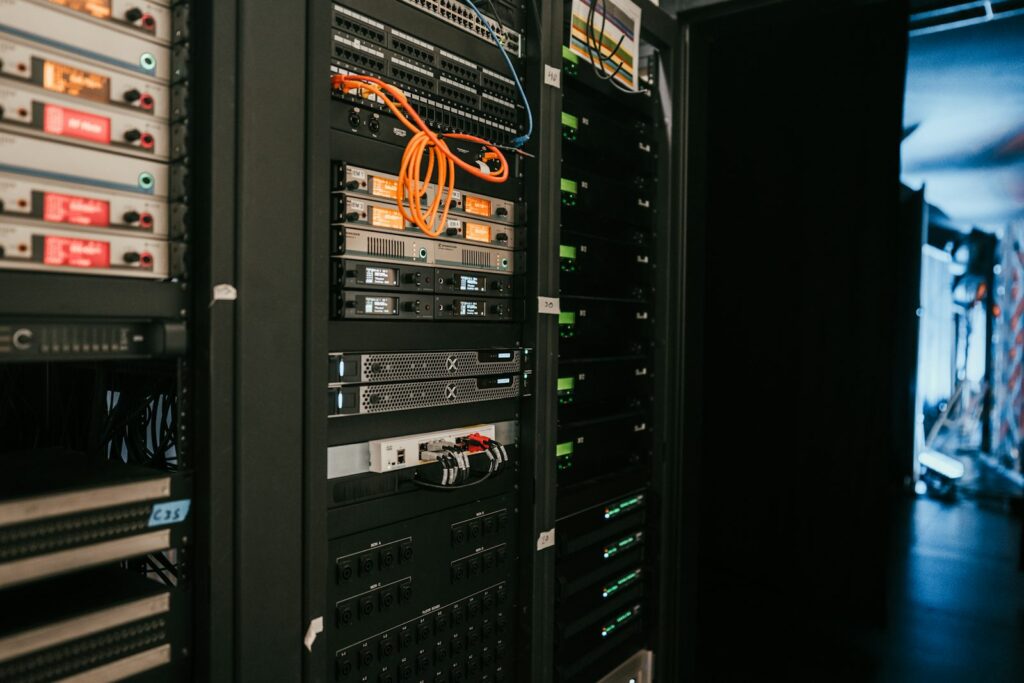
Liquid cooling has gone from a specialty option to a near-standard requirement in AI data centers, driven by a simple physical problem: modern chips generate more heat per square foot than air alone can remove fast enough.

Traditional data centers used air cooling because server power density was manageable with fans and airflow alone. High-density AI accelerator racks draw far more power in the same footprint, generating heat air cooling genuinely can’t remove fast enough to keep chips at safe temperatures.

Rather than blowing air across components, liquid cooling circulates coolant directly to or near the chip, since liquid conducts heat away far more efficiently than air per unit of volume. This lets racks pack in far more compute per square foot than air cooling would allow safely.

The newest AI accelerator platforms increasingly ship with liquid cooling built in as a core design requirement, not an optional add-on, since current chip power density essentially requires it. A real shift from just a few years ago, when it was reserved for a small subset of the highest-density deployments.

This connects to the same underlying constraint covered in our explainer on data center energy use: power availability, not chip supply, is the real bottleneck, and cooling is a meaningful part of a facility’s total power draw. See the International Energy Agency’s own data on demand.

Up Next
TPU vs GPU: What Actually Differs

TPU vs GPU: What Actually Differs

Chips & GPUs

An explainer on the difference between TPUs and GPUs for AI workloads, covering their design tradeoffs and why both remain relevant.

GPUs dominate AI infrastructure headlines, but TPUs are a genuinely different kind of chip built for a narrower purpose.

A GPU packs thousands of relatively general-purpose cores designed to run many different kinds of parallel workloads well, originally graphics rendering, now also AI training and inference. That generality is a real strength: the same chip family handles a huge range of tasks reasonably well.

A TPU, Tensor Processing Unit, is purpose-built specifically for the matrix multiplication operations that dominate neural network math, and little else. That narrower focus lets it be more efficient per watt and per dollar for AI workloads, at the cost of being far less useful for anything outside that lane.

Companies running massive, predictable AI workloads at scale, Google’s own infrastructure being the clearest example, benefit from a purpose-built chip’s efficiency. Companies needing flexibility across varied workloads generally stick with GPUs, more widely available across most cloud providers.

Unless you’re renting raw compute directly, most people access AI capability through an API where the underlying chip choice has already been made. What matters practically is the resulting price and performance, covered in more depth in our explainer on how AI chips are made. See NVIDIA’s own Vera Rubin page for the current GPU generation.