The Agentic Post
Breaking
Gemini’s Multimodal Features, Explained  Â·  ChatGPT Custom GPTs, Explained  Â·  What Is Constitutional AI? Explained  Â·  AI Capex Explained for Investors  Â·  AI Startup Valuations: How They Are Set  Â·  How to Reskill for an AI Job Market  ·  
Home/Business/Enterprise Adoption
AI Adoption Statistics to Know in 2026

AI Adoption Statistics to Know in 2026

Enterprise Adoption

A critical look at enterprise AI adoption statistics in 2026, including the real gap between adoption intent and scaled production deployment.

Enterprise AI adoption numbers get cited constantly, and often imprecisely. Here’s what’s actually well-documented versus optimistic projection.

Widely cited projections suggest a large share of enterprise applications will integrate task-specific AI agents by the end of 2026. Separately, independent research consistently finds the share of enterprises that have actually scaled agents past pilot stage sits in the single digits to low double digits. Both numbers are real, they’re measuring different things, adoption intent versus actual scaled deployment. Conflating them overstates how far along most organizations are.

Our coverage of enterprise deployment models keeps pointing to the same conclusion: governance and workforce readiness, not model capability, separate companies that scale agents from those stuck in pilot purgatory.

Spending is real regardless. Our coverage of a single earnings week found nearly $1.5 trillion in combined market value shifting across three companies based largely on AI-related cloud growth.

When you see a statistic, check whether it measures intent, pilot activity, or actual scaled deployment. And check the sample, self-reported executive surveys skew more optimistic than independent usage data.

See McKinsey’s own research on the state of AI.

Up Next
What Is Embodied AI? A Plain Explainer

What Is Embodied AI? A Plain Explainer

Physical AI

A plain-English explainer on embodied AI, how it differs from language models, and why the reality gap remains its central unsolved challenge.

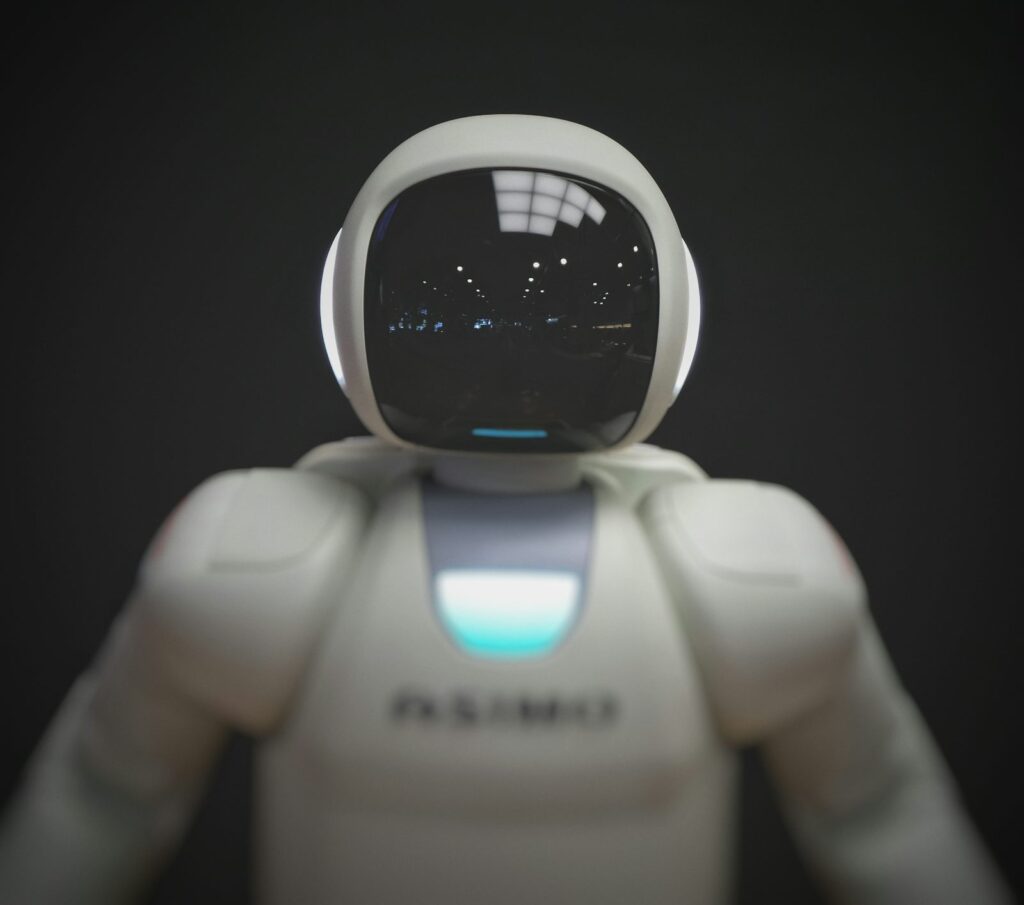
“Embodied AI” and “physical AI” get used almost interchangeably, and both describe a genuinely different bet than the language-model race that’s dominated coverage until now.

Embodied AI refers to systems that learn and act through a physical or simulated body, interacting with a real environment instead of only processing text. A system that has to predict how objects fall, how surfaces feel, how its own actions change the world, develops a different kind of understanding than a model trained purely on text describing those things.

A language model has never watched an object fall. It’s learned patterns in text describing that. Embodied systems train on physical interaction directly, aiming at a kind of understanding text alone can’t fully capture. Our full explainer on physical AI and world models covers the technical details.

Training in simulation is cheap and fast, but simulated physics never perfectly matches real physics. Contact dynamics, sensor noise, material properties all diverge in ways that compound. Our deep dive on sim-to-real training covers why that gap remains the field’s hardest unsolved problem.

NVIDIA’s Cosmos and Isaac, Google DeepMind’s Genie, Fei-Fei Li’s World Labs, all pursuing versions of the same goal from different angles, with serious investment behind it. Worth tracking as its own category, not a footnote to chatbot progress.

See NVIDIA’s own Cosmos platform page for more on this research direction.