The Agentic Post
Breaking
Gemini’s Multimodal Features, Explained  Â·  ChatGPT Custom GPTs, Explained  Â·  What Is Constitutional AI? Explained  Â·  AI Capex Explained for Investors  Â·  AI Startup Valuations: How They Are Set  Â·  How to Reskill for an AI Job Market  ·  
Home/Business/Markets
AI Chip Stocks Lost $1T, Then Rallied

AI Chip Stocks Lost $1T, Then Rallied

Markets

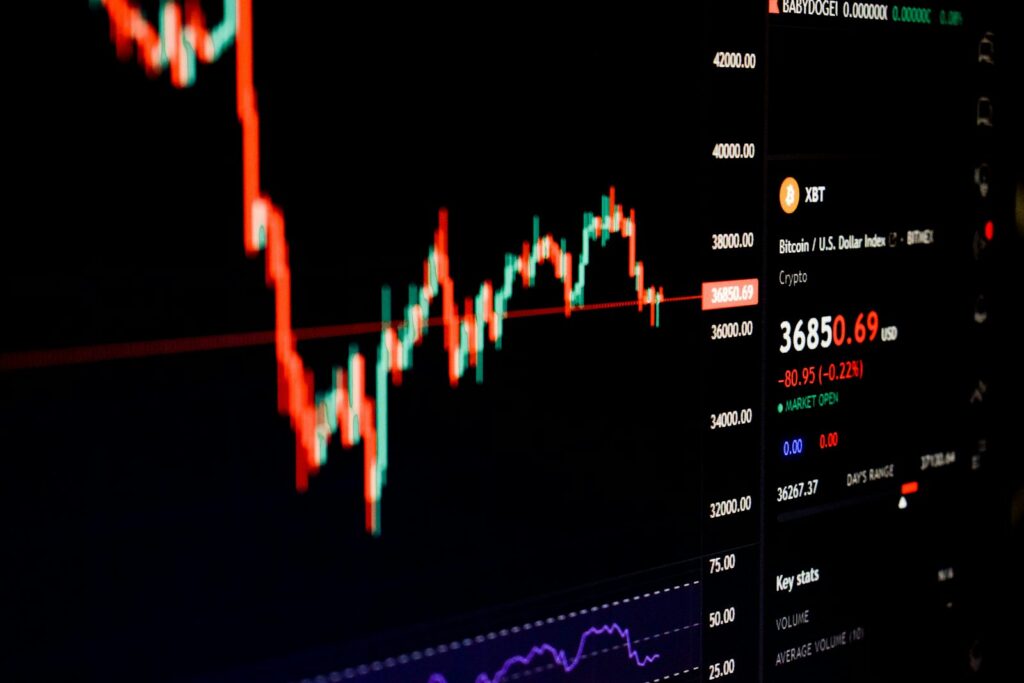
A wave of AI chip stock selling erased over $1 trillion in market value after TSMC's earnings, before a Microsoft-led tech rally partially reversed the move days later.

AI chip stocks lost more than $1 trillion in combined market value in a matter of days in late July 2026, triggered by, of all things, a chipmaker beating earnings expectations. The selloff shows how sensitive the market has become to any sign that AI infrastructure spending might be running ahead of what current revenue can justify.

Quick facts

  • Nvidia, SK Hynix, Samsung Electronics, Micron, AMD, and TSMC each lost more than $100 billion in market value during the selloff, per CNBC.
  • The trigger was TSMC’s Q2 2026 earnings on July 16: revenue of $40.2 billion (up 36% year-over-year) beat guidance, but the stock still dropped 7.3% on the report.
  • TSMC raised its 2026 capital expenditure guidance to $60-64 billion, at least $4 billion above its prior forecast, spooking investors concerned about margin compression.
  • SK Hynix posted record quarterly profit and revenue but still closed 9.61% lower on the week, after dropping more than 15% at one point.
  • By July 30, technology stocks staged their biggest one-day rally since mid-2025, helped by a strong Microsoft earnings report, even as Meta shares fell more than 9% on a revenue miss the same day.

Why beating earnings triggered a selloff

TSMC’s results were genuinely strong by almost any measure: revenue up 36% year-over-year, net profit up 77.4%, and a raised full-year growth outlook. What spooked the market was the capex guidance sitting alongside those numbers. Higher spending from the world’s most important chipmaker would normally read as confirmation of continued AI demand, good news for the whole supply chain. Instead, per CNBC’s reporting, Forrester VP analyst Charlie Dai described the reaction as reflecting concern that AI infrastructure spending may be “peaking faster than expected,” with investors reassessing whether near-term revenue can actually justify the current pace of capital spending across the sector.

A repricing, not necessarily a demand problem

Dai’s framing is worth sitting with because it cuts against the more alarmist read: he characterized the move as “less about weakening AI demand and more about a repricing of expectations after an exceptionally strong rally,” not evidence the underlying AI buildout is actually slowing. That distinction matters. Chip stocks had run up sharply through the first half of 2026, TSMC alone remained up more than 50% on the year even after the drop, and a selloff that trims an overheated rally is a materially different event than one signaling that hyperscalers are actually pulling back on AI spending. Alphabet, notably, announced it would raise its own 2026 capex forecast around the same window, which is a strange thing to do if the underlying demand story were actually breaking down.

The rebound came fast, and unevenly

The selloff didn’t hold uniformly for long. By July 30, the S&P 500’s information technology sector posted its best single day since mid-2025, adding nearly 5% in one session, helped along by Microsoft’s earnings beat and confirmation that Azure’s annual revenue had crossed $100 billion for the first time. But the rebound wasn’t shared evenly across AI-linked stocks: Meta reported the same week and missed on both earnings per share and revenue guidance, and its shares dropped more than 9% even as the broader tech sector rallied. That split, one mega-cap AI infrastructure story surging while an AI-application company gets punished on the same day, is a useful signal that investors are drawing real distinctions between different parts of the AI trade rather than treating it as one undifferentiated bet.

What to actually watch next

Nvidia reports its own quarterly earnings on August 26 or 27, depending on the source, and multiple analysts have flagged that report as the next real test of whether this repricing sticks or reverses. Wall Street consensus estimates point to roughly 80-96% year-over-year revenue growth for the relevant quarter; a result meaningfully below that, or cautious forward guidance, would tend to confirm the market’s current skepticism, while a strong beat with confident guidance could reverse the move quickly, as similar reports have done before in this cycle.

Key takeaway

This wasn’t a story about AI demand collapsing, it was a story about a very hot trade getting genuinely nervous about its own valuation for the first time in a while. Nothing here is investment advice, and markets can move on sentiment as much as fundamentals in either direction; if you’re trying to understand what’s actually happening rather than trade on it, the capex-versus-revenue tension described above is the real thing to track, not any single day’s stock move.

Up Next
Kalanick’s Atoms Raises $1.7B From Uber

Kalanick’s Atoms Raises $1.7B From Uber

Startups

Travis Kalanick's industrial AI company Atoms raised $1.7 billion led by Andreessen Horowitz, betting on specialized robots over humanoids for physical-world automation.

Nine years after Uber forced Travis Kalanick out as CEO, Uber itself just wrote him a check. Kalanick’s industrial AI company, Atoms, raised $1.7 billion in a round led by Andreessen Horowitz on July 22, 2026, with Uber joining as an investor and a16z co-founder Ben Horowitz taking a board seat.

Quick facts

  • Atoms raised $1.7 billion in equity funding led by Andreessen Horowitz, announced July 22, 2026.
  • Investors include Bain Capital Ventures, Fifth Wall, Chemistry, A*, K5 Global, Abstract, SV Angel, Alpha Square Group, and, notably, Uber itself.
  • The round merges Kalanick’s CloudKitchens, the mining-automation firm Pronto (acquired March 2026), and a transport business into a single equity structure organized as Atoms Food, Atoms Mining, and Atoms Transport.
  • a16z has framed the investment thesis explicitly around specialized robots over general-purpose humanoids for most industrial physical work.
  • The round lands amid record capital flowing into physical AI: global robotics funding hit roughly $55.8 billion in 2026 through early June, nearly double the previous annual record, per Dealroom data.

The Uber reconciliation nobody expected

The personal backstory here is doing real work in the coverage, and it’s worth understanding why. Kalanick was pushed out of Uber in 2017 following complaints of sexual harassment, discrimination, and a toxic workplace culture. Per Startup Fortune’s reporting, Kalanick has said a partnership with Marc Andreessen and Ben Horowitz nearly came together at Uber back in 2011, and its failure to close had lasting consequences, he’s suggested Uber’s later troubles trace partly to not having Andreessen on the board. Fifteen years on, that partnership finally has a cap table, and Uber’s own participation as an investor reads as a notable, if quiet, signal about how the company now views its founder’s post-Uber work.

What Atoms actually is

Atoms grew out of City Storage Systems, the holding company Kalanick built after leaving Uber, which included CloudKitchens, his ghost-kitchen business. The company operated quietly for roughly eight years before emerging publicly under the Atoms name as a broader industrial automation platform. It’s now organized around three divisions: Atoms Food (building on the CloudKitchens infrastructure), Atoms Mining (built on Pronto, the heavy-industry automation company formerly led by Anthony Levandowski, which Kalanick acquired in March 2026), and Atoms Transport. Kalanick has described the underlying strategy as a continuation of the same idea behind Uber: applying software and automation to physical-world industries that make, move, mine, and store goods.

A deliberate bet against humanoids

The more substantive story, beyond the personal narrative, is the investment thesis a16z is putting real money behind. Rather than betting on general-purpose humanoid robots capable of doing many different jobs, Atoms builds specialized robots purpose-built for narrower tasks within each industry. Ben Horowitz has argued that most physical work doesn’t need a general-purpose humanoid form factor to be automated effectively, and that the frontier of productivity gains sits specifically in physical industries: making things, moving things, storing things, at a scale that dwarfs most digital-only businesses. That’s a direct counterpoint to the Boston Dynamics and Figure AI approach of building one flexible humanoid platform meant to generalize across many tasks.

Why this fundraise environment matters

Atoms isn’t raising in isolation. Robotics and physical AI funding overall hit roughly $55.8 billion through the first half of 2026 alone, nearly double the previous full-year record, according to data cited in the coverage. That’s the broader context for why a $1.7 billion round for a company with a genuinely mixed operating history, CloudKitchens has drawn its share of criticism over tenant experiences and rapid expansion and contraction over the years, was still able to close at this size. Capital is moving fast toward anything credibly positioned in physical AI right now, and investor appetite is currently outpacing the sector’s track record of proven, at-scale deployments.

Key takeaway

The money and the reconciliation narrative are the headline, but the real test is operational: folding autonomous mining haulage, ghost-kitchen infrastructure, restaurant software, and a future transport business into one coherent company is a genuinely harder execution problem than raising the capital to attempt it. Watch what Atoms actually ships in each of its three divisions over the next year, not the funding announcement, for a read on whether the specialized-robots thesis holds up against the humanoid approach everyone else is betting on.