The Agentic Post
Breaking
Gemini’s Multimodal Features, Explained  Â·  ChatGPT Custom GPTs, Explained  Â·  What Is Constitutional AI? Explained  Â·  AI Capex Explained for Investors  Â·  AI Startup Valuations: How They Are Set  Â·  How to Reskill for an AI Job Market  ·  
Home/Hardware & Robotics/Humanoid Robots
Hyundai Fully Owns Boston Dynamics Now

Hyundai Fully Owns Boston Dynamics Now

Humanoid Robots

Hyundai is buying SoftBank's remaining stake in Boston Dynamics for about $325 million, clearing the way to deploy Atlas humanoid robots at a Georgia plant starting in 2028.

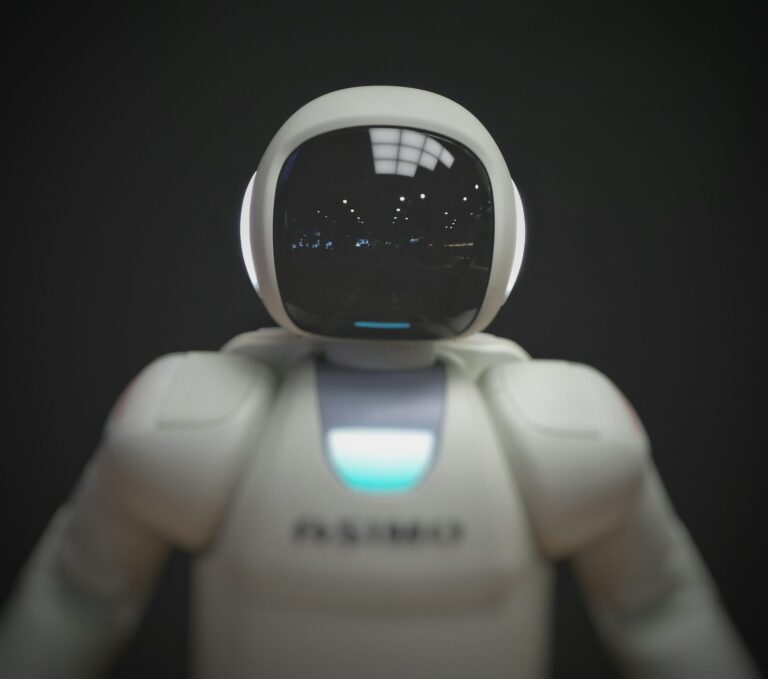
Hyundai Motor Group is buying out SoftBank’s remaining stake in Boston Dynamics, making the robotics company a wholly owned subsidiary and clearing the way to deploy its Atlas humanoid robot on real factory floors starting in 2028. The deal, disclosed July 16, 2026, values SoftBank’s roughly 10% stake at about $325 million.

Quick facts

  • Hyundai will acquire SoftBank’s remaining roughly 9.65-10% stake in Boston Dynamics for about $325 million, per Reuters and Bloomberg.
  • The transaction’s locked-in price implies a Boston Dynamics valuation of roughly $3.3 billion, the same figure used when Hyundai first took an 80% stake in 2021 — well below outside estimates that now range from $20 billion to $100 billion.
  • Hyundai plans to begin deploying Atlas at its Metaplant in Savannah, Georgia in 2028, starting with parts-sequencing tasks.
  • The company is targeting a scale-up toward component assembly work by 2030, with reported ambitions of tens of thousands of units annually.

Why SoftBank sold now

This wasn’t Hyundai simply deciding to buy more of Boston Dynamics on its own timeline. Per Reuters’ reporting, SoftBank exercised a put option built into the original 2021 acquisition agreement, which gave it the right to sell its remaining stake back if Boston Dynamics hadn’t gone public by this year. Hyundai held a matching call option secured in 2025. With no IPO having happened, the option triggered, and full ownership resolves the overhang: Hyundai now has complete strategic control to make long-term investment and business decisions, including on any future public listing, without SoftBank’s separate interests in the mix.

The valuation gap nobody’s fully explaining

The most interesting detail in the deal isn’t the ownership change, it’s the price. The transaction locks in Boston Dynamics’ value at roughly $3.3 billion, identical to the valuation Hyundai used back in 2021. Outside estimates for what the company is actually worth today, given how far humanoid robotics has advanced and how much capital has flowed into the sector since, run anywhere from $20 billion to $100 billion. Kiwoom Securities analyst Shin Yoonchul noted that Hyundai’s stock barely moved on the news, which he read as investors questioning whether the higher outside valuations were ever justified, rather than viewing this as Hyundai getting a steal. Either the market is wrong about what humanoid robotics companies should be worth, or the locked-in 2021 price structure just meant SoftBank’s exit came at a valuation everyone agreed to years before Boston Dynamics’ current progress was visible.

What Atlas is actually going to do

The commercial plan is concrete and dated, which distinguishes it from a lot of humanoid robot announcements that stay vague on timelines. Atlas deployment begins in 2028 at Hyundai’s Metaplant in Savannah, Georgia, starting with parts-sequencing, a constrained, repetitive task well suited to current robot capability, before expanding to component assembly by 2030. According to Bloomberg, Hyundai is developing Atlas’s underlying AI capabilities in partnership with both NVIDIA and Google DeepMind, rather than building the full model stack in-house. That two-vendor approach to the AI layer, paired with in-house hardware and manufacturing expertise, is a notably different strategy than competitors betting entirely on vertically integrated, proprietary models.

Common questions

Is Boston Dynamics going public soon? Not immediately. Full Hyundai ownership actually removes the near-term IPO pressure that existed under the original SoftBank agreement, giving Hyundai more flexibility on timing rather than less.

How many Atlas robots is Hyundai planning to deploy? Reported figures point toward tens of thousands of units annually once the program scales, though the company’s own public statements have focused on the 2028 and 2030 milestones rather than committing to a specific final unit count.

Does this affect Boston Dynamics’ other robots, like Spot? The ownership change and reporting reviewed here focus specifically on Atlas and the humanoid program; Boston Dynamics’ existing commercial products aren’t described as changing as a result of this transaction.

Key takeaway

This deal is a useful reality check on humanoid robotics hype broadly: even one of the field’s most credible companies, backed by a major automaker with a concrete deployment plan, is still two years out from its first real factory task and four years out from broader assembly work. Full ownership gives Hyundai the flexibility to fund that timeline patiently rather than answering to a separate shareholder’s exit pressure — treat 2028 and 2030 as the actual dates to watch, not any near-term announcement.
Up Next
NVIDIA’s Vera Rubin Chips Ship in Fall

NVIDIA’s Vera Rubin Chips Ship in Fall

Chips & GPUs

NVIDIA's Vera Rubin platform, succeeding Blackwell, entered full production in June 2026 and begins shipping to eight cloud partners this fall, claiming 10x lower inference costs.

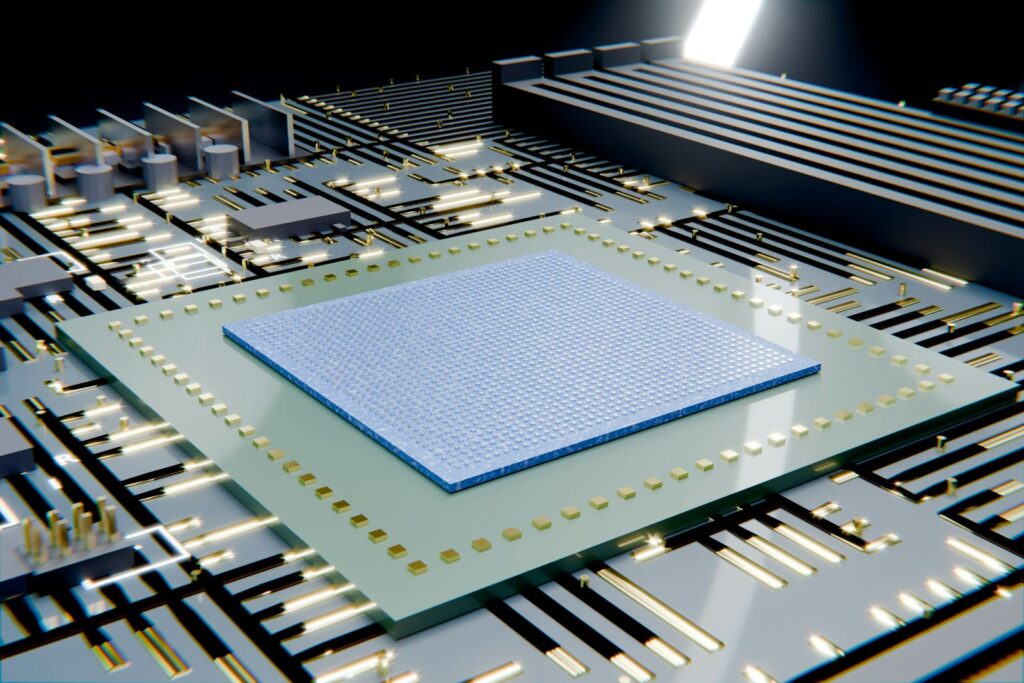
NVIDIA’s next-generation chip platform starts shipping to cloud providers this fall. Vera Rubin, the successor to the Blackwell architecture that currently powers most of the industry’s AI training and inference, entered full production earlier this year and is now rolling out to eight named cloud partners, with NVIDIA claiming a 10x reduction in inference token cost over Blackwell.

Quick facts

  • Vera Rubin is a seven-chip, rack-scale AI computing platform succeeding Blackwell, confirmed in full production at NVIDIA’s GTC Taipei keynote on June 1, 2026.
  • Production shipments begin this fall to eight cloud partners: AWS, Azure, Google Cloud, Oracle, CoreWeave, Lambda, Nebius, and Nscale.
  • The flagship Vera Rubin NVL72 rack packs 72 Rubin GPUs and 36 Vera CPUs, delivering a claimed 3.6 exaflops of inference compute in a single liquid-cooled unit.
  • NVIDIA claims 10x lower inference token cost and roughly triple the memory bandwidth per GPU compared to Blackwell, though these figures haven’t been independently verified at production scale.

What’s actually in the box

Vera Rubin isn’t a single chip, it’s seven co-designed components meant to work as one system rather than parts assembled after the fact: the Rubin GPU, the new Vera CPU (replacing Grace), an NVLink 6 switch, a ConnectX-9 SuperNIC, a BlueField-4 DPU, a Spectrum-6 Ethernet switch, and the Groq 3 LPU, added at GTC in March following NVIDIA’s acquisition of Groq. That last addition is specifically aimed at low-latency, deterministic inference for the decode phase of agentic generation, the step where a model actually produces its response token by token, which NVIDIA says pairs with the NVL72 racks to deliver a 35x improvement in inference throughput per megawatt on trillion-parameter models.

Per NVIDIA’s own announcement, each Rubin GPU carries HBM4 memory delivering roughly 22 terabytes per second of bandwidth, close to triple Blackwell’s per-GPU figure, and NVLink 6 doubles rack interconnect speed to 260 terabytes per second, more bandwidth than the entire internet, according to the company. A full Vera Rubin POD scales to 40 racks and 1,152 GPUs for a claimed 60 exaflops of total compute.

The power problem this is actually trying to solve

The more consequential part of the announcement, for anyone building or operating data centers rather than just buying GPUs, is the infrastructure layer NVIDIA is shipping alongside the chips. Working with more than 200 data center infrastructure partners, NVIDIA introduced the DSX platform, including DSX Max-Q for dynamic power provisioning that the company says lets operators deploy 30% more AI infrastructure within a fixed power budget, and DSX Flex, aimed at treating AI factories as grid-flexible assets that could unlock up to 100 gigawatts of power that’s currently effectively stranded on the grid. Power availability, not chip supply, has increasingly become the actual bottleneck on how fast new AI capacity can come online, which is why infrastructure-layer claims like these matter as much as the raw compute specs.

Who’s actually building on it

Beyond the eight cloud partners receiving initial shipments, NVIDIA lists a broad set of AI labs adopting the platform, including Anthropic, Cohere, Meta, Mistral AI, OpenAI, Perplexity, Runway, and xAI, alongside server OEMs Cisco, Dell, HPE, Lenovo, and Supermicro building Vera Rubin systems. Microsoft has specifically committed to deploying Vera Rubin NVL72 racks in its next-generation Fairwater AI superfactory sites. That breadth of adoption across labs that otherwise compete hard against each other says something simple: nearly the entire frontier AI industry is building its next capacity wave on the same underlying hardware platform, whatever their model-level differences.

Common questions

Does this replace Blackwell immediately? No. Blackwell remains the current generation in wide deployment; Vera Rubin is the next generation beginning shipments this fall, and most existing infrastructure will run Blackwell for some time yet.

Can smaller companies access Vera Rubin hardware? Initial shipments go to the eight named cloud partners and their infrastructure; smaller teams will access the platform through those providers’ cloud instances rather than buying hardware directly, similar to how Blackwell access has worked.

What is the Groq 3 LPU doing in an NVIDIA platform? NVIDIA acquired Groq and integrated its low-latency inference chip design directly into Vera Rubin as the seventh co-designed component, specifically to speed up the token-by-token decode phase of agentic AI responses.

Key takeaway

The specific performance multiples NVIDIA is quoting are the company’s own figures, not independently verified benchmarks, so treat 10x and 35x claims as directional until third-party testing catches up. What’s independently checkable is the shipping timeline and partner list, and those point to the same conclusion either way: most of the AI industry’s next round of compute is landing on Vera Rubin hardware starting this fall.