The Agentic Post
Breaking
Black October 2026: Every Major AI Security Incident, Explained  ·  ARTEX: The Open-Source AI Hacking Tool Behind October’s Biggest Attacks  ·  Chinese Hackers Used AI Agents to Hit 2,250 Microsoft 365 Accounts  ·  PHP2Shell Is Now Being Exploited, and Attacks Began Before the Patch  ·  OpenAI-Backed Thrive Buys ADT for $15.3 Billion to Rebuild It With AI  ·  The AI Data Center Backlash Hits Minnesota and Australia in One Week  ·  
Home/AI Agents/Enterprise Agents
OpenAI-Backed Thrive Buys ADT for $15.3 Billion to Rebuild It With AI

OpenAI-Backed Thrive Buys ADT for $15.3 Billion to Rebuild It With AI

Enterprise Agents

Thrive Holdings, partly owned by OpenAI, agreed to buy ADT for $10 a share in a $15.3 billion all-cash deal, aiming to rebuild the home security company around AI. ADT says privacy policies stay unchanged.

Thrive Holdings, the company partly owned by OpenAI that buys traditional businesses and rebuilds them around AI, agreed on October 29, 2026 to buy home security firm ADT. The all-cash deal values ADT at about 15.3 billion dollars including debt, or 7.6 billion dollars for the shares. ADT shareholders get 10 dollars a share, a 45.6% premium to the October 27 closing price of 6.87 dollars. ADT’s board approved it unanimously.

What is Thrive Holdings?

It is a permanent holding company set up by Josh Kushner’s Thrive Capital, one of OpenAI’s biggest investors. Its model is to buy established companies in everyday industries and transform them with AI. In December 2025 OpenAI took an ownership stake in Thrive Holdings, agreeing to embed its own research, product and engineering teams inside Thrive’s companies, starting with accounting and IT services. OpenAI’s stake grows as those businesses succeed.

ADT is by far its largest purchase. With more than 150 years of history and over 12,000 employees, it will become the foundation of Thrive’s smart home security business and go private, leaving the New York Stock Exchange once the deal closes.

Why would an AI company want a home alarm company?

Because the bet is that AI creates the most value inside big, ordinary businesses with lots of customers and lots of manual work, not inside chatbots. ADT has a national network of technicians, millions of monitored homes, call centres and a huge volume of alarms to sort through. That is exactly the kind of work AI agents are being pitched for: triaging alerts, handling customer calls, scheduling installers. OpenAI has framed the Thrive partnership as a template for deploying frontier AI quickly across entire organisations.

What happens to customer data?

This is the obvious concern with an AI-focused owner buying a company that has cameras and sensors inside people’s homes. ADT’s announcement says its data protection and privacy policies will remain unchanged and that no new data sharing will happen without customer permission. Those are commitments worth holding the new owners to. They say nothing about how future AI features will use data customers do agree to share.

Is the deal certain?

Not yet. ADT has 30 days to look for a better offer under a so-called go-shop clause, and the deal needs shareholder and regulatory approval. Until it closes, ADT runs independently. Whatever happens, it marks a shift: AI labs are no longer just selling tools to companies, they are buying the companies. It echoes how big platforms are wiring agents into real operations, and comes as OpenAI trims its own funding ambitions.


Read ADT’s announcement filed with the SEC.

Up Next
The AI Data Center Backlash Hits Minnesota and Australia in One Week

The AI Data Center Backlash Hits Minnesota and Australia in One Week

Big Tech

Protesters shut down two council meetings before Hermantown, Minnesota approved a Google data center, while all 79 councils in Victoria, Australia demanded a moratorium on new data centers.

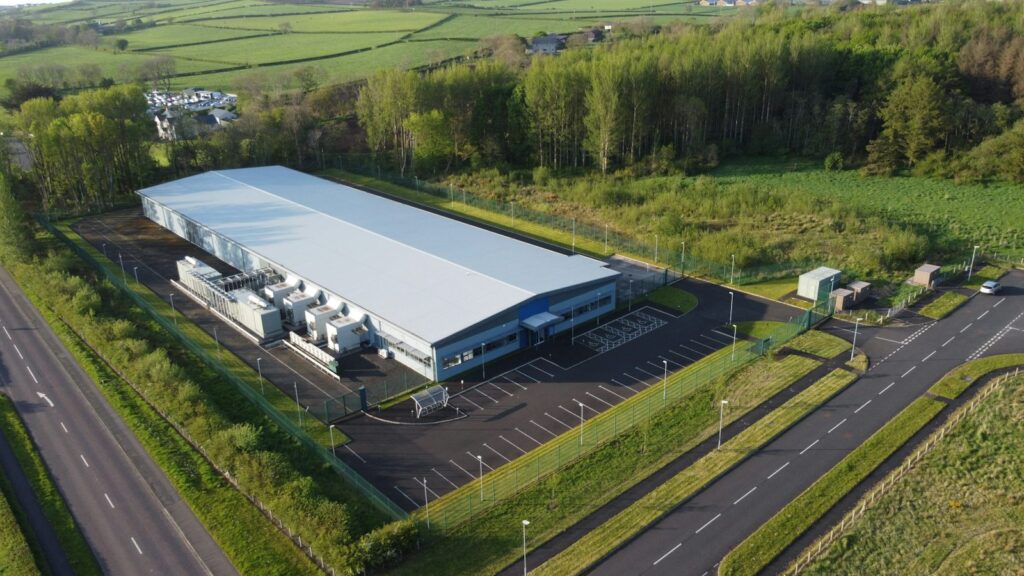
The fight over AI data centers has moved from planning offices to packed council chambers on two continents. In Minnesota, protesters shut down two council meetings before the town of Hermantown approved a 1.7 million square foot Google data center late on Friday night. In Australia, the body representing all 79 local councils in Victoria voted to demand a halt on new data center approvals. Both votes came in the final days of October 2026.

What happened in Hermantown?

Hermantown, a small city next to Duluth, had been expected to give the Google project final local approval on Monday, October 26. Protesters chanted for two hours until the council postponed. A second attempt the next evening was shut down too, and the meeting was moved to Friday. There, the council approved a development agreement, a special use permit and a decommissioning plan for the site, more than 200 acres in a rural part of the city.

Google had already made concessions to get there. It dropped a request for up to 80 million dollars in tax breaks, shrank the facility, added a well-monitoring programme, promised a quieter campus, and agreed to pay to take the site down if it ever closes, which local reporting described as a first for the company. Opponents argued the changes were the minimum needed. The project is not finished: several lawsuits are pending, and the Minnesota Public Utilities Commission still has to approve the power supply deal, with a vote expected next year.

What happened in Victoria, Australia?

The Municipal Association of Victoria, which represents all 79 councils in the state, backed a resolution calling for a moratorium on new or expanded data centers until a full planning and environmental framework is in place. Councils including Melton, which had called for its own local moratorium in August, brought motions to the meeting. A key complaint is that a state fast-track scheme lets large projects bypass local councils.

The vote comes despite new state rules announced in September that already ban data centers from residential zones, require a 150 metre buffer from homes, and make operators supply their own renewable power and avoid drinking water for cooling. Councils say that is not enough. Victoria goes to a state election on November 28, which keeps the issue hot.

Why is the backlash growing now?

Scale. A single modern AI campus can draw as much power as a small city and use large amounts of water for cooling, while employing relatively few people once built. Residents see higher power bills, noise, lost farmland and strain on water supplies, and get little say when projects are fast-tracked. An Investigate Europe report this week also documented poor safety and unpaid wages for construction workers at data center sites in eight European countries.

It is the same tension behind Loudoun County turning on data centers, Texas pausing grid approvals and the debate over how much water AI uses. The industry needs land, power and water faster than local communities are willing to give them. Expect more fights like Hermantown, more conditions like decommissioning bonds, and more votes on pauses, especially in places with elections coming.

Read MPR News on the Hermantown protests.