The Agentic Post
Breaking
Black October 2026: Every Major AI Security Incident, Explained  Â·  ARTEX: The Open-Source AI Hacking Tool Behind October’s Biggest Attacks  Â·  Chinese Hackers Used AI Agents to Hit 2,250 Microsoft 365 Accounts  Â·  PHP2Shell Is Now Being Exploited, and Attacks Began Before the Patch  Â·  OpenAI-Backed Thrive Buys ADT for $15.3 Billion to Rebuild It With AI  Â·  The AI Data Center Backlash Hits Minnesota and Australia in One Week  ·  
Home/AI News/Big Tech
The AI Data Center Backlash Hits Minnesota and Australia in One Week

The AI Data Center Backlash Hits Minnesota and Australia in One Week

Big Tech

Protesters shut down two council meetings before Hermantown, Minnesota approved a Google data center, while all 79 councils in Victoria, Australia demanded a moratorium on new data centers.

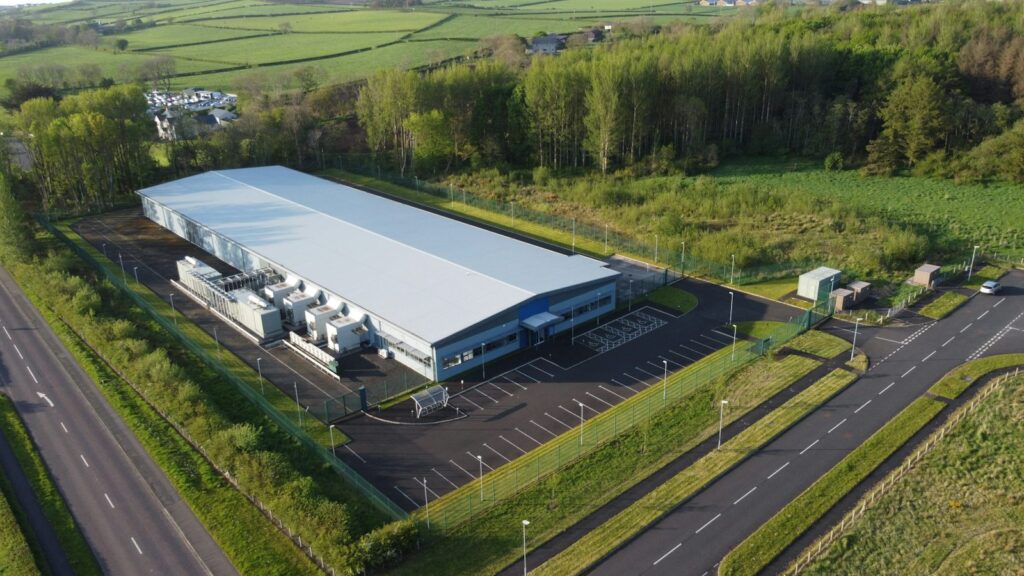
The fight over AI data centers has moved from planning offices to packed council chambers on two continents. In Minnesota, protesters shut down two council meetings before the town of Hermantown approved a 1.7 million square foot Google data center late on Friday night. In Australia, the body representing all 79 local councils in Victoria voted to demand a halt on new data center approvals. Both votes came in the final days of October 2026.

What happened in Hermantown?

Hermantown, a small city next to Duluth, had been expected to give the Google project final local approval on Monday, October 26. Protesters chanted for two hours until the council postponed. A second attempt the next evening was shut down too, and the meeting was moved to Friday. There, the council approved a development agreement, a special use permit and a decommissioning plan for the site, more than 200 acres in a rural part of the city.

Google had already made concessions to get there. It dropped a request for up to 80 million dollars in tax breaks, shrank the facility, added a well-monitoring programme, promised a quieter campus, and agreed to pay to take the site down if it ever closes, which local reporting described as a first for the company. Opponents argued the changes were the minimum needed. The project is not finished: several lawsuits are pending, and the Minnesota Public Utilities Commission still has to approve the power supply deal, with a vote expected next year.

What happened in Victoria, Australia?

The Municipal Association of Victoria, which represents all 79 councils in the state, backed a resolution calling for a moratorium on new or expanded data centers until a full planning and environmental framework is in place. Councils including Melton, which had called for its own local moratorium in August, brought motions to the meeting. A key complaint is that a state fast-track scheme lets large projects bypass local councils.

The vote comes despite new state rules announced in September that already ban data centers from residential zones, require a 150 metre buffer from homes, and make operators supply their own renewable power and avoid drinking water for cooling. Councils say that is not enough. Victoria goes to a state election on November 28, which keeps the issue hot.

Why is the backlash growing now?

Scale. A single modern AI campus can draw as much power as a small city and use large amounts of water for cooling, while employing relatively few people once built. Residents see higher power bills, noise, lost farmland and strain on water supplies, and get little say when projects are fast-tracked. An Investigate Europe report this week also documented poor safety and unpaid wages for construction workers at data center sites in eight European countries.

It is the same tension behind Loudoun County turning on data centers, Texas pausing grid approvals and the debate over how much water AI uses. The industry needs land, power and water faster than local communities are willing to give them. Expect more fights like Hermantown, more conditions like decommissioning bonds, and more votes on pauses, especially in places with elections coming.

Read MPR News on the Hermantown protests.

Up Next
OpenAI Cuts Its Valuation Ask to $1.25 Trillion as Anthropic IPO Nears

OpenAI Cuts Its Valuation Ask to $1.25 Trillion as Anthropic IPO Nears

ChatGPT

OpenAI lowered its funding round valuation from $1.4 trillion to $1.25 trillion after investor pushback, as rival Anthropic prepares a mid-November IPO reportedly targeting $1.5 to $2 trillion.

OpenAI has lowered the price tag on its latest funding round. The company is raising up to 30 billion dollars at a 1.25 trillion dollar valuation before the new money, down from the 1.4 trillion dollars it put to investors earlier in October, according to the Financial Times and Bloomberg. The cut came as investors held back ahead of rival Anthropic’s planned stock market listing, expected in mid-November.

Why did OpenAI lower its valuation?

Investor pushback, a weaker market and competition. Morgan Stanley and Dragoneer had shown the 1.4 trillion dollar figure to wealthy private clients, the FT reported, before it was revised to 1.25 trillion with Coatue and UAE investors leading. The FT later reported some investors cut their allocations and the round could close smaller than the full 30 billion. The backdrop is a tech selloff: the Nasdaq 100 fell roughly 10% over three weeks, and on October 30 Apple overtook Nvidia as the world’s most valuable company as chip stocks slid on doubts about AI spending.

Revenue matters too. OpenAI told investors its annualised revenue was approaching 50 billion dollars at the end of September, the FT reported, below what some had expected.

Is 1.25 trillion dollars still a big number?

Yes. It is about 50% above the 852 billion dollar valuation OpenAI reached in March after a record 122 billion dollar round. A markdown from a higher ask is not the same as a fall in value. What it does show is that investors are now negotiating on price instead of accepting whatever number is offered, which is a change from earlier in the year.

How does Anthropic’s IPO fit in?

It is the comparison everyone is watching. Anthropic, last privately valued at 965 billion dollars in May, is expected to list in mid-November. Reports of its target range from around 1.5 trillion to 2 trillion dollars, with some investors pushing for the lower end. If Anthropic prices above OpenAI’s private round, it would be the first time the newer lab has been valued above OpenAI on the open market, and it would give public investors their first direct way to buy into a frontier AI lab.

There is also a timing logic. Investors who can buy Anthropic shares on a public exchange in two weeks have less reason to rush into an OpenAI private round now, which helps explain the pushback. OpenAI has said its own IPO is not expected before 2027.

What does it mean for everyone else?

A cooling in the most expensive corner of AI tends to spread. Recent weeks saw sky-high valuations for new labs and huge infrastructure commitments. If the two leaders have to compete for the same investor money, smaller AI startups may find rounds harder and pricing tougher. For customers, the competition is good news: both labs need growth, which has so far meant better models at lower prices.

See Tech Funding News on the revised round.