The Agentic Post
Breaking
Veo 3.1 vs Kling 3.0 vs Runway vs MiniMax H3: Best AI Video Generator After Sora  ·  ElevenLabs Realtime v1: One Voice Model That Replaces the Whole Voice-Agent Stack  ·  OpenAI Images 2.6: GIFs, 50% Faster Images and New Flare and Sunburst Models  ·  Best AI Image Generator (November 2026): GPT Image 2.6 vs Nano Banana 2.1 vs Grok Imagine  ·  Agility Robotics Goes Public: The First US Humanoid Robot Stock (AGLT) Explained  ·  Grok Bot Usage Limits: Why Subscribers Are Running Out and What Musk Said  ·  
Home/AI News/Big Tech
NYT and Three Newspapers Sue Brave Over AI Search Data

NYT and Three Newspapers Sue Brave Over AI Search Data

Big Tech

The New York Times and three Alden-owned papers sued Brave, alleging its 30-billion-page search index copies their journalism and is sold to AI firms including Anthropic and Perplexity.

The New York Times and three other US newspapers sued Brave Software on November 2, 2026, accusing the privacy-focused browser company of copying their journalism into a giant search index and selling access to AI companies. The papers say Brave’s index covers more than 30 billion web pages, that its API is marketed for training AI models, and that Brave’s browser helps readers get around paywalls. Brave had not publicly responded.

Who is suing, and where?

Two separate suits in federal court in Manhattan. The New York Times filed one. Hours later, the publishers of the New York Daily News, Chicago Tribune and Orlando Sentinel, all owned by Alden Global Capital, filed another, saying more than two million of their registered articles are affected. They claim copyright infringement, breaking technical protections under the DMCA and, for the Alden papers, unjust enrichment. They want damages, Brave’s profits, a permanent injunction and a jury trial.

What do they say Brave did?

  • Built a giant index of 30 billion+ pages with a crawler Brave has not named, so publishers cannot block it.
  • Sold it to AI labs: the complaints say Brave’s Search API is sold to Anthropic, Perplexity, Mistral, xAI and Cohere, and marketed for training and grounding AI models.
  • Copied articles in AI answers: its "Ask Brave" feature allegedly reproduces passages word for word.
  • Bypassed paywalls: a browser setting allegedly lets users read subscriber content without logging in.
  • Blocked publishers’ ads by default while selling its own.

Why does this case matter more than it looks?

Because Brave is a supplier, not just a chatbot. Most AI copyright suits target the model makers directly, like USA TODAY’s case against OpenAI. This one goes after the company that sells the web data many AI tools use to answer questions in real time. If publishers win, every search API that feeds AI could face the same claims, which would raise costs across the industry.

Brave has fought this before. In March 2025 it sued News Corp, asking a court to declare its web indexing fair use, and News Corp countersued that July. The publishers also cite a study finding AI crawlers send 95.7% less referral traffic than Google Search, the heart of the "no reason to click" argument that now runs through almost every publisher case.

For readers, nothing changes today. For anyone building with AI search APIs, it is worth watching whose data sits underneath your answers.

Read The Next Web’s report.

Up Next
Google Turns AI Off for Students, and Search Goes With It

Google Turns AI Off for Students, and Search Goes With It

Big Tech

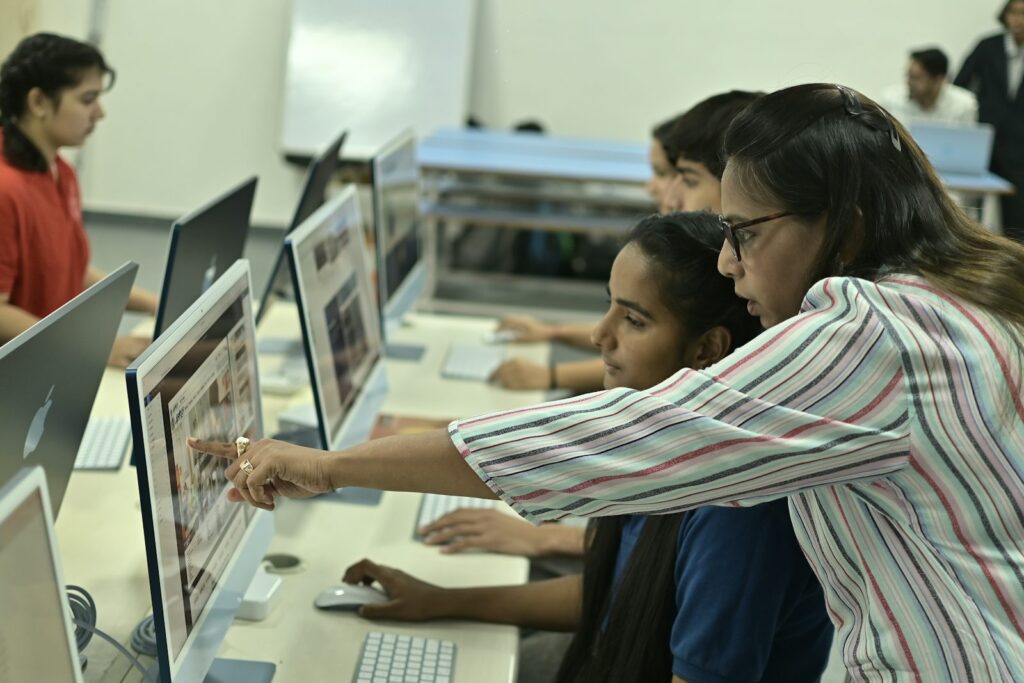
Google will keep Gemini and Search off for K-12 student accounts until schools opt in. Because Search has built-in AI, schools that want no AI must switch Search off entirely.

Google is switching off its AI tools for school students by default. The company said on November 3, 2026 that Gemini, Gemini Notebook, Gemini in Classroom and Google Search will be turned off for K-12 student accounts until a school administrator chooses to turn each one on. The catch: Google says it cannot fully remove AI from Search, so schools that want no AI will have to turn off Search entirely.

What exactly is changing?

Until now Google had switched Gemini on for students by default, which caught many school districts off guard. Under the new approach, nothing AI-powered reaches a student account unless the school opts in. Google says it will share the exact timing with schools "in the coming months"; some reports put the new defaults in early 2027.

Why does Search get switched off too?

Because AI is now built into Google Search itself, through features like AI Overviews, and Google offers no AI-free version. Google’s education chief Chris Phillips told Chalkbeat that schools wanting no AI must turn Search off. In practice that leaves schools with an awkward choice: allow AI in student Search, or lose the world’s most-used search engine on school accounts. Critics have called that holding Search hostage. Google frames it as giving schools control.

What is Guided Learning?

It is Google’s answer to the worry that AI does students’ homework for them. Guided Learning asks questions and walks through steps instead of handing over answers. It is now available worldwide in Google Classroom, where teachers can read students’ chats, and Google will test it inside Search at some US schools, for example prompting a student to work through a physics problem rather than showing the answer.

Why the change now?

Pressure from schools and parents. Large districts including New York and Los Angeles restrict student AI use, and in July Common Sense Media rated Google’s AI Search an "unacceptable risk" for students. New York City’s mayor has accused Google of using its market power to push AI into classrooms. Opt-in by default is the cautious setting most child-safety groups asked for. Tying it to Search is the part schools will push back on.

For parents, the practical step is to ask your child’s school which Google AI tools it plans to enable, and whether Guided Learning will be the default mode. It is part of a wider shift we have seen in how the same AI is switched on or off depending on who is using it.

Read The Next Web’s report.